



クロップシアー圧延機
/In today's high-speed rolling operations, the automatic gauge control system (AGC) has become an indispensable technology for maintaining precise thickness tolerances in strip production. As rolling speeds continue to increase to meet production demands, conventional manual control methods have become obsolete, giving way to sophisticated AGC controller systems that can make microsecond adjustments to maintain dimensional accuracy. The implementation of hydraulic automatic gauge control in modern cold rolling mills represents a significant technological leap. This precision is particularly critical in industries such as automotive manufacturing and electronics, where material consistency directly impacts product performance and quality. Core Components of AGC Systems in High-Speed Applications The automatic gauge control cold rolling mill relies on an integrated network of precision components working in perfect synchronization. At its heart lies the AGC controller , a high-speed computational unit that processes input from multiple sensors and executes control algorithms within milliseconds. Modern systems employ X-ray or gamma-ray thickness gauges that provide non-contact measurement at speeds compatible with today's production rates. These are complemented by load cells that monitor rolling force and laser speed sensors that track strip velocity. The hydraulic automatic gauge control system represents the muscle of this operation, with servo valves capable of adjusting the roll gap position in response times measured in microseconds. This combination of rapid sensing, processing, and actuation creates a closed-loop system that maintains gauge consistency despite variations in material properties or rolling conditions. AGC Systems : Dynamic Response Challenges at High Rolling Speeds Operating an automatic gauge control system at high speeds presents unique engineering challenges. As rolling velocities increase, the time available for detection, computation, and correction decreases proportionally. At 1,500 meters per minute, for instance, the strip moves 25 millimeters in just one millisecond - the typical response time of advanced AGC controller systems. This demands not only faster sensors and processors but also predictive control algorithms that can anticipate thickness variations before they occur. Modern systems address this through advanced feedforward control techniques that use upstream thickness measurements to pre-adjust the roll gap before the measured section arrives at the roll bite. The automatic pressure control subsystems must also respond with exceptional speed to maintain consistent rolling force during these rapid adjustments, preventing strip breaks or shape defects. Advanced Control Algorithms for High-Speed Precision in AGC Systems The intelligence behind today's high-speed automatic gauge control cold rolling mill lies in its sophisticated control algorithms. Modern systems employ a combination of feedback, feedforward, and adaptive control strategies to maintain gauge accuracy. The feedback loop continuously compares actual thickness measurements with target values, making immediate corrections. Feedforward control uses upstream measurements to anticipate required adjustments, while adaptive algorithms modify control parameters based on changing mill dynamics. Some advanced systems now incorporate artificial intelligence techniques, where machine learning algorithms analyze historical performance data to optimize control parameters for specific product grades or rolling conditions. This multi-layered approach allows the AGC system to maintain precision even during speed transitions or when processing materials with variable hardness along the strip length. Hydraulic System Innovations for Rapid Response in AGC Systems The hydraulic automatic gauge control system represents the critical link between electronic commands and physical roll gap adjustments. In high-speed applications, these systems have evolved to meet extraordinary performance demands. Modern servo-hydraulic systems can achieve response times under 10 milliseconds, with some advanced designs reaching 5 milliseconds or less. Key innovations include high-flow servo valves with digital interfaces, compact hydraulic cylinders with minimal stiction, and advanced fluid conditioning systems that maintain optimal viscosity and cleanliness. The automatic pressure control components have similarly advanced, with proportional pressure-regulating valves that can make precise force adjustments during rapid mill acceleration or deceleration. These hydraulic systems work in concert with the mill's mechanical components, compensating for mill stretch and thermal expansion effects that could otherwise compromise gauge accuracy. AGC Systems : Integration with Mill Drive and Tension Control Systems In a high-speed automatic gauge control cold rolling mill , the AGC system cannot operate in isolation. Effective thickness control requires tight integration with the mill's drive and tension control systems. As the AGC controller adjusts the roll gap to correct thickness variations, it must coordinate with the drive system to maintain proper speed relationships between stands. Similarly, tension control systems must respond appropriately to prevent strip breaks or shape defects during rapid gauge adjustments. Modern mills achieve this integration through high-speed communication networks that allow millisecond-level synchronization between all control systems. Some advanced installations use model predictive control techniques that optimize the combined response of gauge, speed, and tension control systems, particularly during acceleration and deceleration phases where dynamic effects are most pronounced. Maintenance and Calibration Considerations of AGC Systems The precision of an automatic gauge control system in high-speed operation depends heavily on proper maintenance and regular calibration. Thickness measurement devices require frequent calibration checks to maintain their accuracy, while hydraulic systems need meticulous fluid maintenance to preserve their rapid response characteristics. The AGC controller systems typically include built-in diagnostic tools that monitor system performance and identify components requiring attention. Modern predictive maintenance techniques, using vibration analysis and fluid condition monitoring, help prevent unexpected downtime that could be particularly costly in high-speed operations. Regular verification of the complete control loop - from thickness measurement through to actual roll gap movement - ensures the system maintains its specified performance levels throughout extended production runs. The automatic gauge control system has become the cornerstone of precision in modern high-speed rolling operations, enabling mills to maintain tight thickness tolerances while achieving unprecedented production rates. From sophisticated AGC controller algorithms to rapid-response hydraulic automatic gauge control mechanisms, these systems represent the pinnacle of industrial automation technology. As rolling speeds continue to increase and product specifications become more stringent, the ongoing development of AGC technology will remain critical to the competitiveness of metal producers worldwide. The integration of emerging technologies like AI and digital twins promises to take gauge control precision to even higher levels, ensuring that cold rolling mills can meet future challenges while maintaining the highest quality standards.

We have successfully executed over 500
projects around the world,
many first-of-their-kind
research projects and products in China, including
We have successfully executed over 500
projects around the world,
many first-of-their-kind
research projects and products in China, including
-
2004
The 1st hydraulic AGC system for hot rolling of ribbon steel
-
2006
The 1st AFC system used for 1450mm skin pass mill
-
2009
The 1st 5-stand tandem line with 2-stand POR & Uncoiler for 650mm ribbon steel
-
2012
The 1st reversing mill for 1380mm strip
-
2016
The 1st soft-rolling system used in skin pass mill
-
2019
The 1st fully automated medium-width tandem cold rolling mill
-
2021
The 1st 5000KN Twin-stand double skin pass mill
-
2022
The 1st coupled pickling line & tandem cold mill with two modes - big roller & small roller
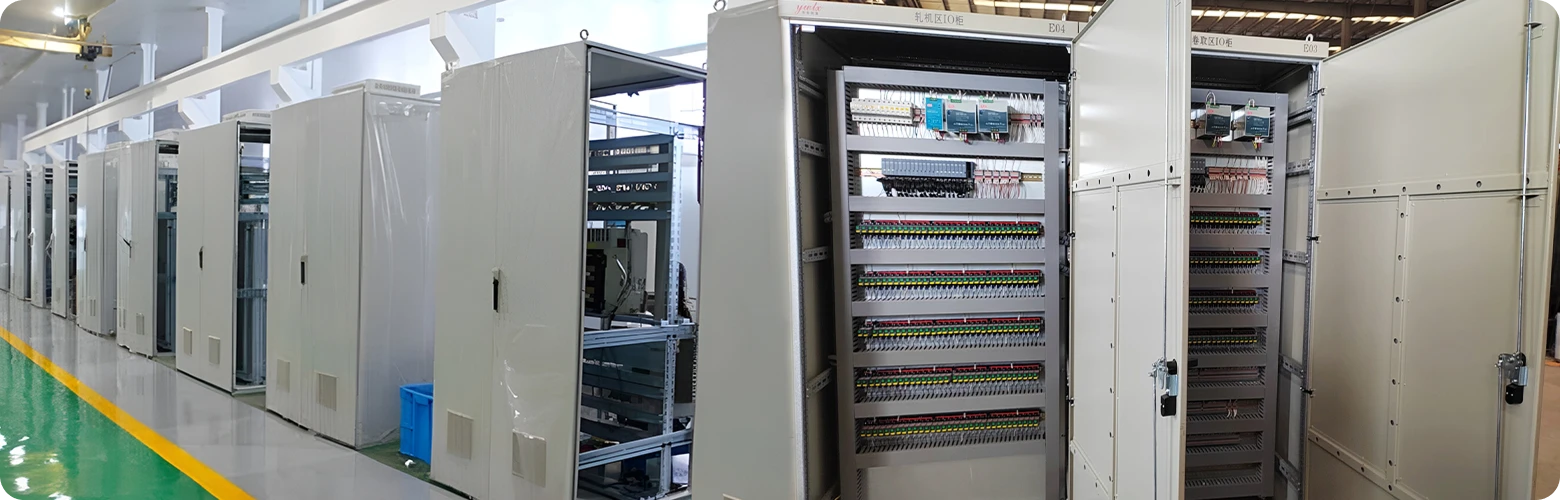
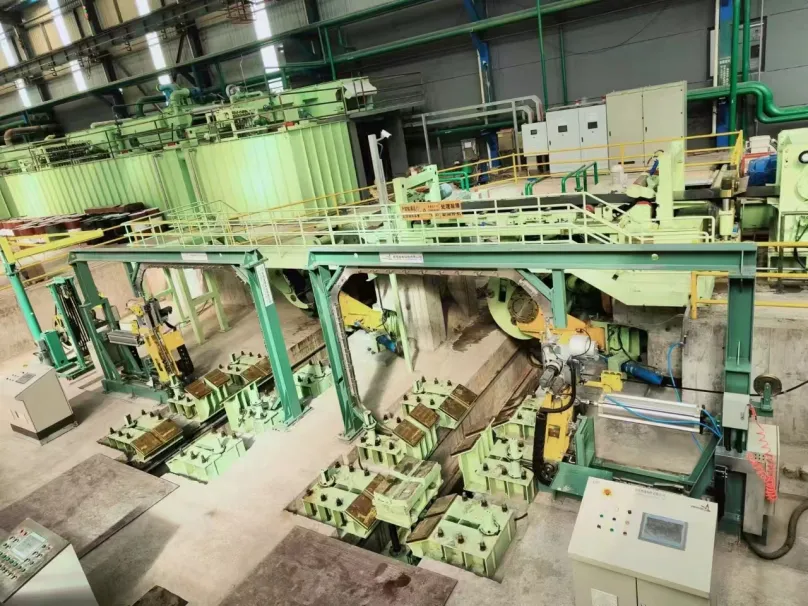
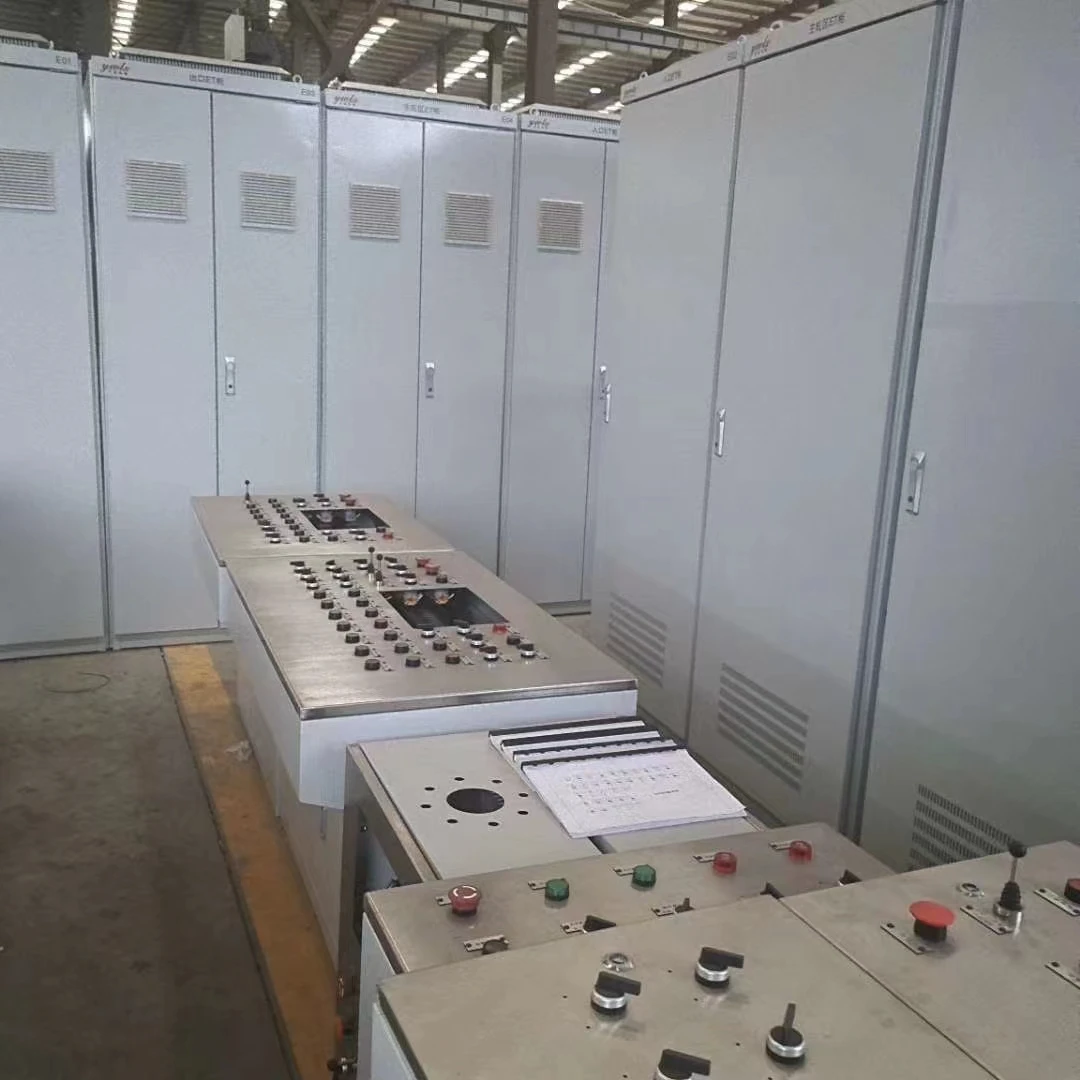
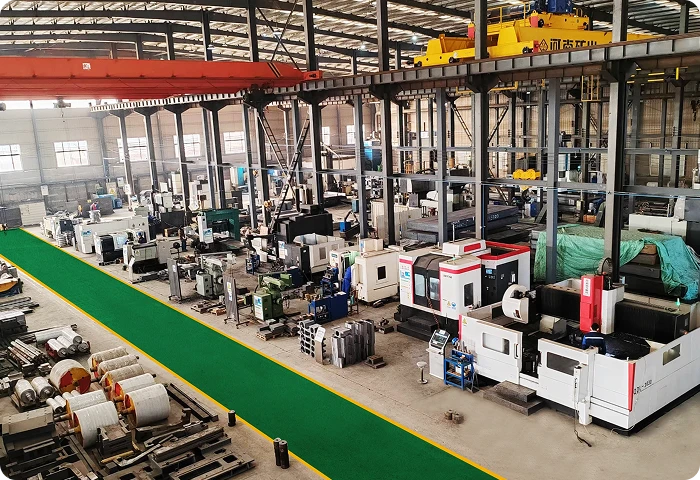
Yang Wang Li Xin operates a state-of-the-art facility over 66,000 square meters,and our manufacturing facility is fully equipped with high-tech machinery and high-capacity cranes. This enables us to handle large work pieces measuring 4.5m in width, 10m in length, and 1.5m in height, guaranteeing our capacity to produce 1800mm skin-pass mills and 1450mm rolling mills. The individual piece can weigh up to 100 tons.

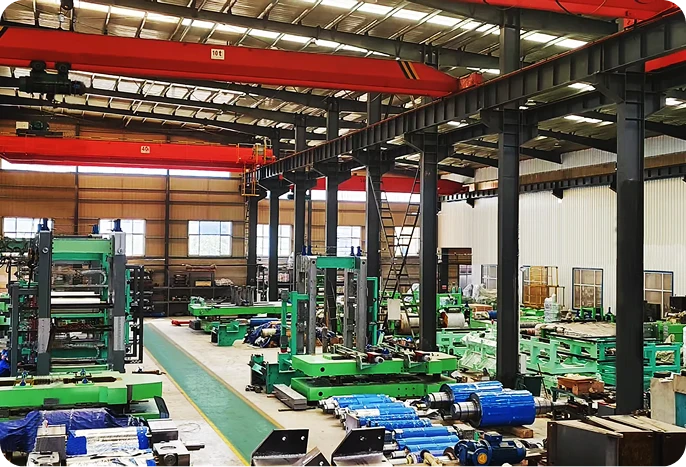

Quality is fundamental to the enterprise survival. We have established a comprehensive and meticulous quality management system and have successfully obtained ISO14000 certification. Starting from the design source, it supervises the entire production cycle, including design, procurement, processing, assembly, in-factory testing, installation, and online commissioning. The workshop is equipped with measuring tools like vernier calipers, spectrometers, hardness testers, and ultrasonic flaw detectors. They are used to check materials and control tolerances to ensure the final equipment meets or exceeds requirements. All products have a unique code, This enables the easy identification and traceability of the equipment components and ensures full control of quality.


-
 How Skin Pass Technology Prevents Springback And Enhances Dimensional AccuracyIn precision steel production, skin pass rolling represents a sophisticated final processing step that goes far beyond simple surface treatment. This specialized rolling operation, typically applying just 0.5-3% reduction, serves as the crucial bridge between steel mills and end-users by transforming theoretically flat strip into dimensionally stable, fabrication-ready material. The skin pass mill
 -
 What are the main differences between Reversible rolling mills and Tandem rolling mills?There are three main differences between reversible rolling mills and continuous rolling mills: 1. Different Rolling Process Reversible Rolling Mill : It can roll in two opposite directions alternately on the same stand. The workpiece passes through the rolls back and forth, and each pass through the rolls subjects it to a rolling deformation. It's like a person walking back and forth on a road, c
 -
 Advanced Cladding Rolling Mill Technology For Bimetal ProductionThe global manufacturing sector is experiencing a significant transformation in material applications, particularly in industries requiring specialized metal composites. The growing adoption of cladding technology represents a fundamental shift from conventional single-metal production toward sophisticated multilayer materials that deliver enhanced performance characteristics. This evolution is es


